Quick Summary: If you’re planning to build an EdTech product, one of the first questions on your mind is likely, “How much will the EdTech app development cost?” And the truthful reply is—it varies. The cost can be extremely variable depending on how elaborate your concept is, the functionality you need, which platforms you are looking to cater to, and even where your development team is located. Within this in-depth guide, we will break down the primary cost influencers, give practical examples like Duolingo and BYJU’S, and give you a rough idea of what to anticipate at every phase of your EdTech app journey.
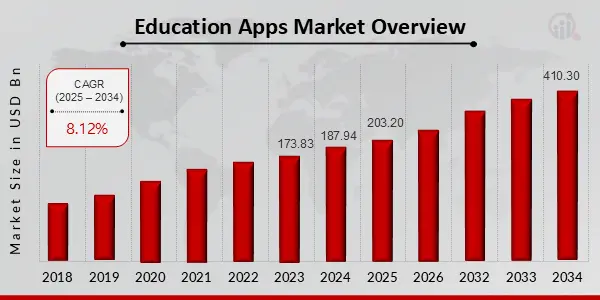
The education industry has also experienced an enormous digital transition. As per reports, the education app market is expected to more than double over the next decade, growing from $203.2 billion in 2026 to an estimated $410.3 billion by 2034. From virtual classrooms to dynamic quizzes, mobile learning has gone mainstream. Whether you are a startup entrepreneur, an educational organization, or a training company, developing an education app has the power to scale your impact. However, if you’re planning to include AI-powered capabilities such as personalized learning, AI tutors, automated assessments, or intelligent recommendations, the cost of developing AI features should also be factored into your overall budget. But before you start, there is always one question that comes to mind:
I’ve worked with a number of founders and decision-makers attempting to solve this very same question. And what I’ve observed is this: if you don’t make plans for the complete picture—features, tech, people, and post-launch—you’ll wind up overspending or, worse still, building the incorrect thing.
Let’s go through it all—clearly and in practice.
What is an Education App?
An education app is any software designed to deliver learning content, manage educational processes, or support training. This could range from:
Language learning apps like Duolingo
Online tutoring platforms like BYJU’S
Skill-based courses like Coursera or Udemy
Custom learning management systems (LMS) for schools or enterprises
Some are the product of mobile app development only. Some run across the web and tablet. Some are as simple as quiz generators, while others are fully immersive platforms with AI-based recommendations.
The variety is huge—which is exactly why the cost to build an education app can range widely.
Key Factors Affecting the Cost to Build an Education App
Before you get an exact number, you need to consider the moving parts. Here are the main things that influence education app development cost:
1. Type of App
E-learning course app
Quiz & test app
School management app
Student tracking system
Video-based tutoring platform
Each has different complexity and technical requirements.
2. Platform
iOS, Android, or cross-platform (like Flutter or React Native)
Web-based vs mobile-only More platforms = more cost (unless you use cross-platform tools wisely).
3. Feature Set
The deeper your app, the more you’ll spend. More on this in the next section.
4. UI/UX Design
Interactive learning needs intuitive, engaging interfaces especially for kids and teens.
5 Third-Party Integrations
Payment gateways, video conferencing (Zoom/Agora), analytics tools, CRM, etc.
6. Development Location
Rates vary drastically.
USA/UK: $100–$200/hr
Eastern Europe: $40–$70/hr
India/Asia: $20–$50/hr
7. Team Type
Freelancers? In-house? Outsourced company? Each has different pricing, risk, and quality implications.
Cost Breakdown for Education App Features Wise
Let’s look at what specific features cost (approximate ranges using a mid-range dev team):
Feature
Estimated Cost
User Login & Profile
$1,000 – $2,500
Course Catalog
$2,000 – $4,000
Video Streaming Integration
$3,000 – $8,000
In-app Messaging
$2,500 – $6,000
Live Class Scheduling
$3,000 – $7,000
Payment Gateway
$1,500 – $3,000
Admin Panel & Reporting
$3,000 – $6,000
Gamification (badges, levels)
$2,500 – $5,000
Push Notifications
$800 – $1,500
AI Recommendations (basic)
$4,000 –$10,000
Average Cost to Build Different Types of Education Apps
Here’s what we’ve seen based on past work and industry reports for the average price of educational app:
App Type
Basic Version
Advanced Version
Quiz/Test App
$10,000 – $20,000
$30,000 – $50,000
Online Course App
$20,000 – $35,000
$50,000 – $80,000
Language Learning App
$25,000 – $40,000
$60,000 – $100,000
LMS for Schools/Enterprise
$30,000 – $60,000
$80,000 – $150,000+
Virtual Tutoring Platform
$35,000 – $70,000
$100,000 – $200,000
Estimated Development Cost by Region
Where your developers are located affects your cost dramatically.
Region
Average Hourly Rate
USA & Canada
$100 – $200/hr
Western Europe
$70 – $120/hr
Eastern Europe
$40 – $70/hr
India & Southeast Asia
$20 – $50/hr
Outsourcing to regions like India can significantly reduce your education app development cost while maintaining quality and if you work with experienced teams.
Don’t make the mistake of analyzing app development budget for education only for launch. Here’s what you also need to consider:
Maintenance & Updates: 15–25% of dev cost annually.
Server & Hosting Fees: Depends on traffic, content type (video-heavy = more cost)
Support & Bug Fixes
Licensing Fees (for tools like Zoom, AWS, or payment systems)
Marketing & App Store Fees
Plan for sustainability not just launch.
Did you know? In 2023, the educational app market was worth $146 billion, and it’s expected to grow to $549.6 billion by 2033 a near fourfold increase within ten years and counting.
How to Reduce the Cost of Developing an Education App
Not all cost-saving methods are smart. But here are ones that actually work:
1. Start with an MVP
Don’t rush to build everything on day one. Prioritize core features, validate the idea, and expand based on user feedback.
2. Choose the Right Tech Stack
Cross-platform frameworks like Flutter or React Native help reduce development costs by supporting both Android and iOS from a single codebase.
3. Reuse Existing Components
Features such as authentication, payment gateways, and push notifications don’t need to be developed from scratch.
4. Work With an Experienced Team
While experienced developers may cost more initially, they help avoid expensive rework and delays. Technource provides dedicated teams with extensive EdTech expertise.
Custom vs Ready-Made Education Apps: Cost Comparison
Sometimes clients ask: “Should we just use Moodle or a WordPress plugin?”
Ready-Made Pros:
Cheap or even free
Fast to launch
Good for early validation
Cons:
Hard to customize
Limited design flexibility
Often clunky or bloated
Licensing headaches
Custom Apps:
Higher initial cost
Built exactly how you need
Scales as your user base grows
Adds long-term brand value
If you’re building a product that’s part of your core offering or plan to scale—custom is worth it.
In 2024, the global education app market was valued at $6.2 billion, and according to reports, it’s set to grow rapidly reaching $41.6 billion by 2033 with an expected CAGR of 21.5% between 2026 and 2033.
Conclusion
There’s no single answer to how much it will cost to create an education app. But with proper planning, tech selection, and a commitment to core value, you can sidestep overspending and create something that actually benefits your learners.
Whether you’re creating a humble chatbot or just estimating an average cost to develop an education app like BYJU’S, plan beyond features. It’s worth teaming up with an experienced education app development company, one that really gets how to build EdTech apps that can grow and evolve with your users.
FAQs
Depending on features and region, it ranges from $20,000 to $150,000+. A feature-rich platform like Duolingo would cost significantly more.
App complexity, number of features, design requirements, and team location are key factors.
Begin with an MVP, employ cross-platform technology, and hire experienced Android developers or ios developers familiar with the EdTech market.
Ready-made solutions take longer and cost less to begin. Personalized platforms provide you with control, branding, and adaptability in the long term.
Between 8 weeks (for a minimal MVP) and 6–9 months for a full-functioning solution.

 AI Agent DevelopmentDeploy agents that act autonomously