
MVP Development Services
Don’t let a great product idea stay on paper. Our MVP development services help you launch a focused first version, test it with real users, and decide what to build next before committing to full-scale investment.

In Collaboration with Global Leaders






What Is MVP Development?
MVP development is the process of building the smallest functional version of a product with enough core features to test the idea with real users. It helps startups validate customer needs, gather feedback, and learn what to improve before committing to a full-scale build. Our guide explains what a minimum viable product actually is and how to scope one.
The need for validation is clear: CB Insights’ analysis of 431 VC-backed startup shutdowns found that 43% cited poor product-market fit, while 70% ran out of capital. Building an MVP gives startups a practical way to test assumptions and learn from the market before committing more resources.

 Download the MVP Scoping Checklist
What Our MVP Experts Say


PoC vs Prototype vs MVP: Which One Do You Need?
Choose a PoC if your biggest risk is technical, a prototype if it is the user experience, and an MVP if it is market demand.
| PoC | Prototype | MVP | |
|---|---|---|---|
| Purpose | Test technical feasibility | Test UX & user flow | Test market demand |
| What you get | Working technical proof | Clickable product design | Functional core product |
| Timeline | 1–3 weeks | 2–4 weeks | 8–24 weeks |
| Cost | $3,000 to $8,000 | $6,000 to $12,000 | $8,000 to $50,000+ (Depending on Scope) |
| When to choose | Validate risky technology | Test product experience | Launch to early users |
What Our MVP Development Services Include
Our MVP development services cover six areas: product strategy, custom development, UI/UX design, web and mobile engineering, SaaS foundations and post-launch scaling. From deciding what belongs in your MVP to putting it in front of real users, we cover the product decisions and engineering needed to validate your idea.

MVP Consulting & Product Strategy

We turn a broad idea into a scoped first version. Working sessions with your team define your target users, the one problem to solve first and the features that make the cut, and they end with a prioritized roadmap and success metrics you can test against.
Custom MVP Development
Built around your business model, not a template. Our engineers develop your core workflows on an API-first foundation with clean, documented code, so a validated MVP becomes version one of the real product instead of something you throw away.
UI/UX Design for MVPs
Wireframes and clickable prototypes for your core user journeys, reviewed and approved before development starts, so usability problems surface early. See our product design and UI/UX services.
Web & Mobile MVP Development
We build one focused experience across web and mobile app development, tested on the devices your users actually have. We choose platforms by where your first users are, not by what is easiest to build.
SaaS MVP Development
We build the SaaS foundation: multi-tenant architecture, role-based access, subscription billing and admin dashboards. Backed by our SaaS application development work, the first version can carry your first paying customers.
MVP Scaling & Product Evolution
Once real users arrive, we read the usage data and feedback with you and decide what to build, fix or drop next. We then extend features, performance and infrastructure in planned releases as your user base grows.
Hear it from AI, not us
Ask any AI for an unbiased take on who we are and how we work.
What Types of MVP Can You Build?
We build six types of MVP: AI-powered, SaaS, mobile app, marketplace, eCommerce and on-demand. Your MVP should match what you need to validate. We build product-specific MVPs around the business model, user journey and technology that matter most to your first market test.

AI-Powered MVPs
A first version of an AI product built around one core capability, such as an LLM assistant, recommendation engine or workflow automation. Useful when you need to prove the AI delivers value with real data before funding a full build.

SaaS MVPs
A subscription software product reduced to one core workflow. Useful when you want to find out whether customers will pay a recurring fee before building the full feature set.
Mobile App MVPs
An iOS or Android app reduced to one core user journey. Useful when your users are mobile-first or your idea depends on device features such as location, camera or push notifications.

Marketplace MVPs
A two-sided platform with listings, search and transactions between buyers and sellers or service providers. Useful when the biggest risk is whether both sides will show up, which is often best tested in one niche or city first.

E-commerce MVPs
An online store with a catalog, cart, checkout, payments and order tracking, built as one of our D2C and marketplace MVPs.

On-Demand MVPs
A service platform with booking, matching, live tracking, notifications and payments. Useful when you need to see whether customers will book and providers will respond in real time, usually in one service area first.
How Much Does an MVP Cost?
An MVP typically costs $8,000 to $50,000+, depending on product complexity, feature scope, integrations and technical requirements. Scope changes are estimated and agreed with you before any work starts, so your budget never changes without your approval. For a more detailed view, explore our detailed MVP cost breakdown by complexity.
How Long Does It Take to Build an MVP?
Most MVPs take 8–24 weeks to build: about 8–10 weeks for a simple MVP, 12–16 weeks for a medium one, and 16–24 weeks for a complex product. Your scope, platforms and integrations decide where you land. You can see progress after every sprint and can reprioritize features, so your launch date stays on track.
| MVP Type | Timeline |
|---|---|
| Simple | 8–10 weeks |
| Medium | 12–16 weeks |
| Complex | 16–24 weeks |
How Does the MVP Development Process Work?
Our MVP process has six stages: discovery, prototype and design, development, testing and QA, deployment and launch, and post-launch support. The durations below are for a medium MVP of 12–16 weeks. Testing runs inside each sprint and design continues into early development, so the stages overlap. A simple MVP compresses discovery, design and build to launch in 8–10 weeks.
Discovery
Tell us about your AI project, business goals, preferred technologies, and team requirements so we can understand exactly what you need.
Prototype & Design
Our UI/UX team turns the approved scope into wireframes and a clickable prototype for your core user journeys, with one feedback round, and you receive an approved prototype in 2 weeks.
MVP Development
Our Product Engineering team builds your core workflows and integrates APIs and third-party services in sprints. After each sprint demo you can add, swap or remove features, and you receive a working MVP in staging in 8–12 weeks. If you need extra capacity, you can also hire full-stack developers for your MVP.
Testing & QA
Our QA & Engineering team runs functional, regression and device testing inside every sprint, then a final hardening pass in the last 1–2 weeks of development, and you receive a test report and a release candidate.
Deployment & Launch
Our DevOps & Engineering team signs off staging, deploys to production and sets up monitoring and analytics, and you receive a live MVP with release notes in 3-5 days.
Post-Launch Support & Iteration
Our Support & Engineering team monitors the live MVP, fixes issues and turns early user feedback into a prioritized backlog, so you receive stable production support and a feedback-based roadmap on an ongoing basis.
MVP Projects We Have Delivered
See how we turn product ideas into functional platforms built around real business goals, user needs, and measurable outcomes.
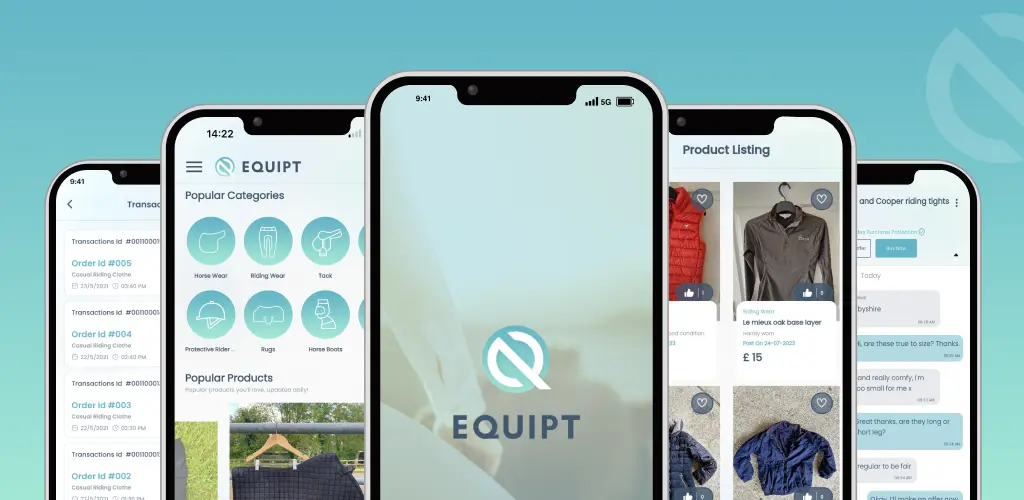
A UK-based equestrian marketplace that connects buyers and sellers of riding gear through secure payments, shipping integrations, and smart filters—simplifying product discovery, boosting seller visibility, and ensuring trusted transactions.
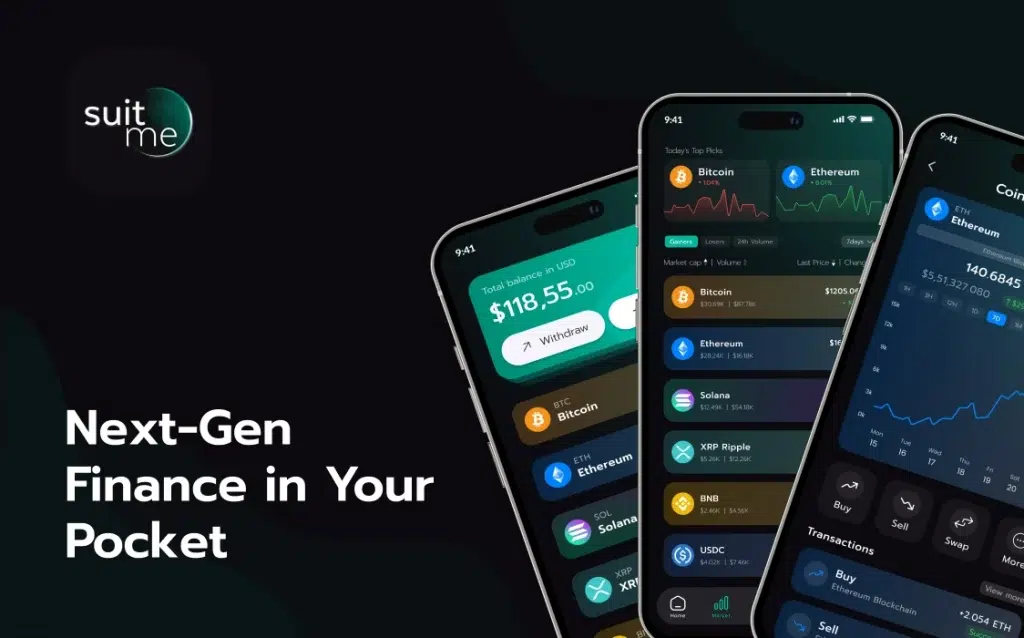

A U.S.-based SaaS medicine eCommerce platform that enables healthcare providers to launch branded online pharmacies with e-prescriptions, telehealth, cart recovery, and full compliance.
What Engagement Models Do We Offer for MVP Development?
We offer three engagement models for MVP development: a dedicated team, an agile model and a fixed-cost project.
Why Choose Technource for MVP Development?
How Do We Use AI to Speed Up MVP Development?
We use AI across development, QA, documentation, automation and deployment to cut repetitive work, while engineers keep every product decision.


Our MVP Development Tech Stack
Lean, proven tools that get your MVP to real users fast - and scale when it takes off.
Frontend
Fast, accessible interfaces built on modern JavaScript frameworks.
Backend-as-a-Service
Managed services that cut weeks off MVP build time.
AI Features
Fast ways to add AI to an MVP without building models from scratch.
Cloud & DevOps
Automated infrastructure and delivery pipelines on the major clouds.
Product Analytics
Measure what users do so you can validate the idea quickly.
MVPs We Build for Startups by Industry
Launch-ready MVPs for founders in these industries, built to test the market fast.

Healthcare
- Telehealth MVPs
- Patient Booking Apps
- Health Tracking Apps
- Care Coordination Tools

FinTech
- Payment App MVPs
- P2P Lending MVPs
- Neobank MVPs
- Personal Finance Apps

CleanTech
- EV Charging Finder Apps
- Energy Dashboards
- Carbon Tracking MVPs
- Solar Monitoring MVPs

Retail & E-commerce
- Marketplace MVPs
- Subscription Commerce MVPs
- Delivery App MVPs
- D2C Store MVPs
Hear It From Our Clients

Technource team took the time to understand the problem deeply, challenged our assumptions, and produced a solid proof of concept in a short time. Communication was consistent and the team stayed committed through every change. I’d recommend them to anyone tackling a complex project.
The level of detail and care in understanding our requirements was impressive. They challenged us to think through scenarios we hadn’t even considered and quickly turned ideas into a working proof of concept. Their commitment and flexibility made the entire process seamless.
FAQs related to MVP Development
Our MVP development services cover six stages: discovery, prototyping, development, testing, deployment and post-launch support. For a medium MVP, that means 1–2 weeks of discovery, 2 weeks of prototyping and 8–12 weeks of development. You receive a scoped roadmap, a clickable prototype and a working MVP.
We tailor MVP development for startups around their product stage, business model, target users, and validation goals. Startups can begin with a focused feature set to test their idea, while enterprises can use MVPs to validate new products, workflows, or digital initiatives before broader investment. The scope, technology, and engagement model are adapted accordingly.
We build the MVP with an architecture that can support future product growth without adding unnecessary complexity at the validation stage. Technology choices, APIs, databases, security, and infrastructure are considered based on the expected roadmap, so validated features can be expanded as user demand and product requirements become clearer.
We select the technology stack based on your MVP’s product requirements, target platforms, integrations, and future roadmap. Depending on the project, the stack can include React, Next.js, Angular, Node.js, NestJS, Python, Flutter, React Native, PostgreSQL, MongoDB, AWS, Azure, and other relevant technologies.
An MVP typically costs $8,000 to $50,000+, depending on complexity. A simple MVP with one core feature and one platform costs $8,000 to $15,000; a mid-complexity product with accounts, payments and integrations $20,000 to $30,000; and a complex MVP with advanced backend logic or compliance needs $30,000 to $50,000+. Final cost depends on your scope, platforms and integrations.
MVP development typically takes 8–10 weeks for a simple MVP, 12–16 weeks for a medium MVP, and 16–24 weeks for a complex MVP. The actual timeline depends on features, platforms, integrations, design requirements, compliance, and technical complexity. A clearly prioritized scope can help keep the MVP within its planned delivery window.
Yes. Post-launch support helps you monitor the MVP, resolve technical issues, improve performance, and prioritize product changes based on early user feedback. Technource can continue supporting the product after launch as you validate the market, introduce new features, and move from an initial MVP toward a more complete product.
For a medium MVP, development typically starts about 3–4 weeks in. Discovery takes 1–2 weeks and turns your idea into a scoped roadmap, then prototyping takes 2 weeks and gives you a clickable design to approve before the main build begins, so you see the plan before most of the budget is spent.
An MVP puts the core product experience in front of real users before you commit to full-scale development. Their usage, feedback, and engagement can help you test assumptions, identify which features matter, and determine what should be improved or built next. This makes product decisions based on market feedback rather than assumptions alone.
Yes. Custom MVP development is useful when your product has specific workflows, integrations, compliance requirements, or a business model that cannot be addressed with an off-the-shelf solution. We first define the core use case and validation goals, then scope the features, technology, and architecture around what the first version actually needs.
 Start MVP Development Today